Board and Surface Preparation
Every leaf, small twig and pine needle is swept off. The spaces between boards are cleared to allow proper water runoff.

We connect residents in this part of the state with local specialists who make grimy or weathered outdoor boards clean again. A local pro removes green algae, dark mildew, embedded dirt, pollen film, and leaf marks from your boards and railings. You simply send one request with basic details about your outdoor area to get matched with an available cleaner. Specialist surface care starts at $150 for basic setups. The process removes gray weathered wood fibers safely, returning natural color to your boards without damaging soft timber or composite surfaces. For North Dakota homeowners, professional deck cleaning supports curb appeal and makes an outdoor living space easier to enjoy. Local specialists tailor each washing service to the boards instead of treating every surface the same.
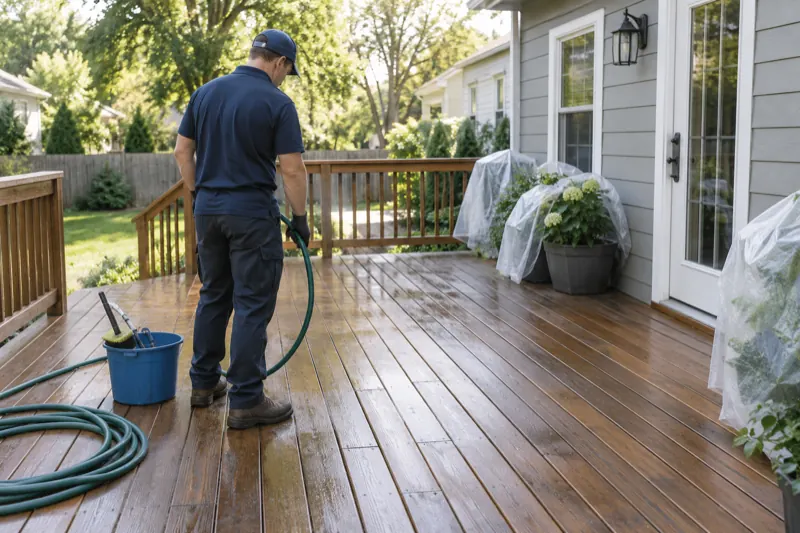
A clean surface ready for barefoot walking comes from a precise, methodical cleaning process in the area.
Every leaf, small twig and pine needle is swept off. The spaces between boards are cleared to allow proper water runoff.
Nearby landscaping, grass and garden beds are rinsed thoroughly with water. Surrounding foliage is covered for extra protection during the service.
A deck cleaner breaks down dirt, pollen film and green growth. The crew uses a gentle rinse along the grain of the wood, handling railings, stairs and balusters manually.
The entire area receives a rinse, followed by a joint walk around the deck to review the finished job. A measured softwash method releases each contaminant, helps remove algae, and breaks up mildew and algae film, grime, and years of dirt. This approach gives outdoor boards a clean finish without harsh blasting.
Applying a fresh coat of finish requires a completely clear wood base free from gray cellulose, mold, and trapped soil. Cedar, redwood, and pressure-treated pine need low-pressure rinsing after a light soap application so the delicate wood stays smooth for future coatings, while hardwoods need heavy dirt removed from deep pores.
Composite and PVC boards never need finish, but dirt and gray fungal growth must still be cleared to keep them looking uniform. A local pro washes the board texture following original manufacturer guidance to lift ground-in dirt safely.
Masonry surfaces like concrete steps, stone pavers, and pool decks clear up quickly under focused rinsing. Removing slippery algae and dirt restores clear lines across all your outdoor hardscaping. Pool deck cleaning services can address hardscape next to the swimming zone as part of the same project. A careful rinse can clean your pool deck, protect your pool, and improve the walking surface.
We connect you with local contractors who clear timber and synthetic decks in your area. Booking a job involves just four basic steps.
Tell us the surface size, material, and board condition, and upload a few photos.
A deck cleaner in the area checks your request and sends a price quote.
Look over the job terms and pick a day for the washing.
The cleaner washes the deck, and you pay only for the actual work with no extra fees.
You can expect surface washing to start at $150. The overall price shifts based on the physical dimension of the boards and the time needed to detail railings, stairs, and balusters by hand. Surfaces buried under severe fungal growth, thick pollen layers, dark leaf marks, or aged gray fibers demand stronger attention than lightly soiled areas. Material differences between composite material and natural wood also shape the work required. High-elevation structures and limited workspace near house lines add labor time. You can choose to add finishing or sealing as an independent job later. The quote provided upfront represents the total cost without extra surcharges.
Questions about your surface? Call +1 (855) 684-6078 or use the quote form.
An older timber structure requires regular care to keep its structure sound and safe underfoot. Over time, growth and fungal growth form a slimy coating that becomes dangerously slick when wet. That hidden layer holds trapped water against aging timber, hastening rot around nails, screws, and board joins. Exposure to the elements breaks down top fibers into loose gray strands that splinter easily. Trying to finish over gray wood or microscopic dirt prevents protective coatings from bonding. Washing clears off biological growth, protects aging fasteners from trapped dampness, and prepares timber for fresh sealer.

If children or pets spend time playing on your outdoor boards, keeping the wood smooth and free of sharp splinters is essential. Severe high-pressure washing strips away softer wood fibers, leaving behind a fuzzy surface full of jagged slivers. A local pro uses a targeted surface washing solution that releases grime, growth and dark leaf marks without gouging the wood. After the formula sits, a gentle low-pressure rinse flushes the boards along their grain. Composite and PVC surfaces are washed using low force to preserve their synthetic outer protective layers. People comparing pressure washing services with professional pressure washing in Reed can choose a method suited to the surface.
Even durable composite materials in the area suffer when cold weather lingers. Packed drifts hold wet leaf layers against synthetic planks for months. Clearings with hard shovels cause surface scuffs, while white chemical crystals discolor composite patterns. Trapped liquid freezes and expands inside microscopic gaps. Warmth reveals dark spots and slick growth across the synthetic boards. A low-pressure rinse removes these stubborn, dull winter deposits safely.
If you plan to apply finish soon, clearing organic debris comes first. Spring brings floating tree cotton that lodges in damp gaps throughout nearby communities structures. Fall drops seed pods and heavy leaves, while persistent winds coat the timber with fine dust. Leaving this dirt intact traps water, causing soft spots in wood boards throughout Cass County. Proper washing clears away these layers so fresh finish bonds directly to sound material.
Your surface may look dull and gray today, but painting finish over that weathered surface guarantees premature flaking. A careful washing clears away the dead wood fibers and embedded grime that block finish absorption. Applying a wood brightener next balances the board tones so your choice of tint looks rich and even. Adequate drying time must follow before applying any protective coat. Sealing or finishing can be added as a separate job with its own estimate once the washing is complete.
Wondering how to protect your surface between thorough cleanings? Routine maintenance takes only a few minutes. Clear away leaves and pine needles before damp warmth turns them into stubborn tannin marks. Clear out the spaces between surface boards so water drains down quickly. Move planters and door mats around so moisture cannot collect on the wood. Prune nearby foliage to eliminate deep shade where growth thrives, and spray down the boards with fresh water to remove yellow pollen layers.
An older timber structure often holds years of embedded dirt, black fungal growth, and gray fibers. Rather than spending your weekend calling different contractors, you can submit a single inquiry through our site. We pair you directly with an experienced local pro who handles outdoor wood surfaces. You receive a detailed quote to inspect, allowing you to approve every term before a cleaner arrives. Payment covers the work itself without any hidden account charges or extra processing costs. Getting your surface refreshed in the area stays direct and transparent from start to finish.
You can submit a washing request for structures anywhere in the the area region. Select your specific town from the options below to connect with a washer nearby. Across Reed and nearby communities, local professionals provide service close to home.
Send us your deck measurements and material details to receive a free quote for service in Reed. Clear photos of the wood or composite help the local pro prepare. You will pay solely for the job itself.
Deck Installation. Copyright . All rights reserved.