Board and Surface Preparation
Leaves, pine needles, and trapped soil are swept away, including debris wedged tight between the floor boards to restore proper air movement.

When you submit a simple service request through our platform, we match you with a local pro to perform thorough local surface care, NJ starting at $150. Faded gray fibers, sticky pollen, dark mildew, and green algae vanish under careful low-pressure washing. You get a tidy outdoor surface without extra booking fees. For New Jersey homeowners, professional deck cleaning supports curb appeal and makes an outdoor living space easier to enjoy. Local specialists tailor each washing service to the boards instead of treating every surface the same.
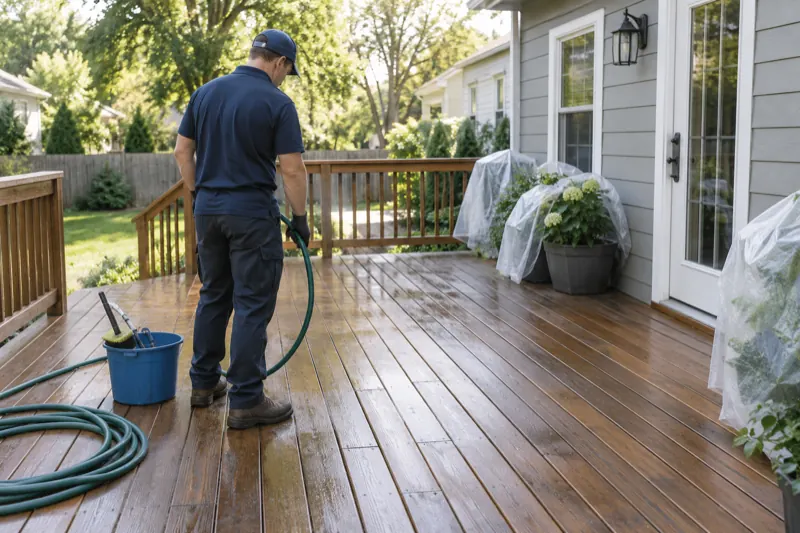
Are you wondering what actually happens during a full deck washing? A local pro follows a clear sequence to ensure every board and surface gets cleaned safely.
Leaves, pine needles, and trapped soil are swept away, including debris wedged tight between the floor boards to restore proper air movement.
Shrubs and flower beds directly alongside the structure are thoroughly soaked with clean water and draped with protective tarps before any solution touches the wood.
A mild washing solution sits on the surface to loosen grime and organic growth. The cleaner then rinses along the grain using low water pressure.
Balusters, handrails, steps, and vertical posts receive manual washing. The pro conducts a final walkthrough with you to verify the entire area is clean. A measured softwash method releases each contaminant, helps remove algae, and breaks up mildew and algae film, grime, and years of dirt. This approach gives outdoor boards a clean finish without harsh blasting.
Starting price estimates cover the fundamental washing methods tailored specifically to your exact deck material.
Dense hardwoods, pressure-treated pine, cedar, and redwood each respond differently to washing. Soft wood requires low pressure and gentle rinsing so board faces remain smooth. The pro clears away dirty gray wood fibers and deep tannin marks safely.
Even though PVC and composite decking do not decay, fungal growth and airborne soot gather inside the textured grooves. Professionals follow board maker care standards to lift marks without dulling the surface.
Surrounding hardscape areas also suffer from weather exposure and heavy outdoor use. Pavers, concrete steps, and pool decks are washed to remove dark algae, moss, and muddy film. Pool deck cleaning services can address hardscape next to the swimming zone as part of the same project. A careful rinse can clean your pool deck, protect your pool, and improve the walking surface.
Railings and balusters take patience, so sending clear photos of your whole layout helps. Describe the material, dimensions, and current condition of the wood or composite.
A local pro reviews your details and sends a single price for the job.
Review the scope and pick a date that works for your schedule.
The pro washes every surface using soft washing methods, and you pay only for the work completed with no extra fees added in the area.
Base deck washing starts at $150 in the area. Prices move up from the base depending on the total square feet and structural elements like spindles, railings, steps, and upper levels. Heavy accumulations of growth, thick moss, gray wood fibers, or rust marks dictate how much washing product and time the pro must use. The specific decking material, from traditional pressure-treated pine to advanced composite, dictates the precise washing technique. Limited space or gated access points can also sway labor costs. Should you want finish or sealer applied afterward, it is priced as a separate service. You review the full price prior to starting.
Questions about your deck? Call +1 (855) 684-6078 or use the quote form.
Have you noticed your surface boards becoming surprisingly slick after a rain shower? That slippery feel comes from growth and fungal growth accumulating on the surface, making stair treads unsafe to walk on. Left unchecked, this fungal layer retains moisture against the wood, accelerating decay near screw holes and structural seams. Harsh sunlight also degrades bare timber, leaving behind loose gray fibers that peel off into splinters. Fresh sealants or marks cannot absorb through layers of dirt and dead wood fibers. Cleansing the material removes hazardous growth and keeps the underlying framing dry and sound.

Sunlight, rain, and shifting humidity weaken the outer wood fibers on a surface long before dark growth settles in. Trying to blast away that gray layer with intense water pressure usually backfires by tearing up the timber, leaving fuzzy splinters and carved gouges along the grain. A local pro applies a suited washing agent that softens grime and loosens weathered wood fibers first. The surface is then washed down with a low-pressure, wide rinse following the board directions. Manufactured materials like composite and PVC receive gentle solutions that match board guidelines, ensuring dark marks disappear without compromising the synthetic surface or stripping factory finishes in the area. People comparing pressure washing services with professional pressure washing in Freehold can choose a method suited to the surface.
Slippery stairs and slick floorboards usually mean organic matter has taken hold on your surface in the area. Wet fall days and damp spring weather feed biological growth, while pollen drops a sticky layer across the surface. Strong summer sunshine steadily turns bare wood fibers gray. Fall leaves that sit on the wood rot into dark tannin marks. Washing away this accumulated layer removes dangerous slickness, washes off tree film, and prepares the wood surface for another year in Monmouth County, New Jersey.
Slippery surface steps in the area often start with damp tree debris left on the surface. Oak and sweetgum leaves gather moisture and release dark tannins that mark the wood. Acorns and spiky balls create tripping hazards in board corners. Spring catkins deposit a layer of yellow pollen film. Gentle washing removes these slick organic piles, restoring safe, clear steps around your home.
Spindles, railings, and tight stair corners often take the most effort to clear properly before applying a fresh finish. Sealers and marks need a completely clear base to stick properly, which means removing gray wood fibers and dirt precedes any application. A brightener solution applied after the rinse evens out natural timber colors. The entire structure must dry thoroughly prior to applying sealers. When you need finish work in the area, sealing or finishing is priced as an independent service following a professional review of the wood.
Slippery surface surfaces usually start with trapped wetness that simple routine maintenance can prevent. Clear leaves and needles off stairs and walking paths so damp growth cannot form underneath. Run a plastic edge along board gaps so rain runs off quickly. Raise potted plants and take up dense floor mats that lock in moisture. Cut back overhanging foliage to maximize sunlight and airflow, and wash away sticky tree pollen regularly with a gentle garden hose rinse.
Slippery film on steps and walking boards can make stepping outside hazardous. You can skip the tedious phone calls by submitting a single online request through our site. We match your project with a local surface washing pro who provides a clear line-item estimate. You stay in total control by approving the job details before any washing starts. The pricing remains entirely transparent, so you pay only for the washing performed without handling extra service fees or surprise costs.
If you live near the area, locate your town in the list below. Choosing your closest municipality ensures your surface washing request goes to a local pro. Across Freehold and nearby communities, local professionals provide service close to home.
Get a free quote for deck cleaning services in Freehold by filling out our simple online form. Include the estimated size, board material, and a couple of helpful photos. A local contractor will examine your information and provide a clear job price.
Deck Installation. Copyright . All rights reserved.