Board and Surface Preparation
Every surface-care service begins by sweeping away loose dirt, fallen leaves, and pine needles while clearing the narrow spaces between boards. A local pro ensures proper airflow and drainage across the surface.

When boards turn gray or show green slick spots, surface washing brings back the solid wood tone underneath. A local pro lifts away dark leaf marks, embedded dirt, moss, mildew, and fuzzy dead surface fibers from your deck in this part of the state. You send a single request with basic details about the layout to receive a price from a local technician. Prices for surface washing start at $150. Your exterior area becomes cleaner and far less slippery without you renting equipment or scrubbing on your hands and knees. For New Jersey homeowners, professional deck cleaning supports curb appeal and makes an outdoor living space easier to enjoy. Local specialists tailor each washing service to the boards instead of treating every surface the same.
Every surface-care service begins by sweeping away loose dirt, fallen leaves, and pine needles while clearing the narrow spaces between boards. A local pro ensures proper airflow and drainage across the surface.
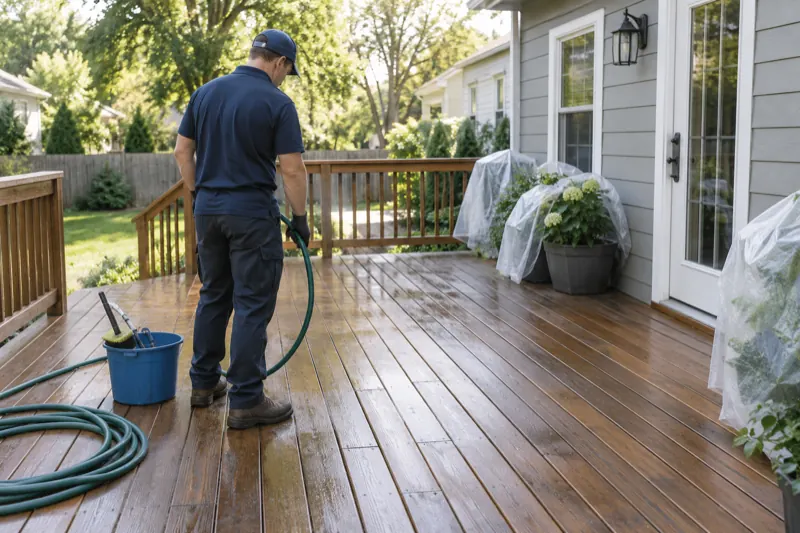
Plants, flower beds, and grass bordering the structure are rinsed with fresh water and protected with tarps.
A formulated surface washing mixture sits on the surface to loosen algae, dark tannin marks, and gray wood fibers. The surface is then washed clear using soft, low-pressure water along the wood grain.
Railings, balusters, and steps are washed by hand to reach all tight spots. The service wraps up with a rinse and a joint walk around the finished area. A measured softwash method releases each contaminant, helps remove algae, and breaks up mildew and algae film, grime, and years of dirt. This approach gives outdoor boards a clean finish without harsh blasting.
You do not have to spend hours scrubbing outdoor boards or guessing which pressure level is safe for timber. Pressure-treated pine, cedar, redwood, and dense hardwoods each require unique washing methods. Soft woods need low pressure to prevent surface scarring, while dense hardwoods require specialized washing agents to dissolve tough dirt and graying fibers.
Skip the tedious work of hand-scrubbing stubborn fungal growth out of synthetic board grooves. Composite and PVC materials resist structural rot, but fine surface textures trap pollen and grime. A local pro washes engineered boards following the board manufacturer's care recommendations.
Leave the heavy washing of concrete and stonework to experienced cleaners as well. Paver walkways, concrete steps, stone pool surfaces, and patios in the area are thoroughly washed without you lifting a hose. Pool deck cleaning services can address hardscape next to the swimming zone as part of the same project. A careful rinse can clean your pool deck, protect your pool, and improve the walking surface.
An older timber structure requiring a thorough surface wash can be handled using four simple steps.
Provide the general size, wood species if known, current surface condition, and recent photos.
A local surface pro assesses your information and provides a clear washing estimate.
Examine the proposed details, approve the cost, and pick a fitting service date.
The contractor applies proper solutions and rinses the wood safely. You pay only for the finished work without extra charges.
Pricing for specialist surface care starts at $150. The overall footprint in square feet acts as the primary price driver, but the physical condition of the timber or composite boards is equally important. Structures heavily coated with gray sun-damaged fibers, stubborn leaf tannins, or slick green algae take longer to wash safely. Architectural elements like balusters, guardrails, and stair treads call for manual detailing. Heights, steep backyard terrain, or tight gate entries can also influence the labor involved. If you choose to apply a protective oil, finish, or clear seal after washing, that work is quoted as an additional standalone job. You always receive your complete price before any washing starts.
Questions about your surface? Call +1 (855) 684-6078 or use the quote form.
If you plan to apply fresh sealer or finish, washing the surface clear of old debris comes first. Dirt, pollen, and gray wood fibers act as a barrier that keeps new finishes from soaking evenly into the grain. Beyond preparing the surface, thorough washing removes dark fungal growth and film that turn stairs slick during rain. Clearing away damp organic buildup around board joints, nails, and screws slows down localized wood decay. Removing loose, sunburned fibers reduces splintering under foot. A clear surface helps protective coats bond properly while keeping the structure sturdy and secure for everyday use in the area.

High pressure damages soft wood. It gouges deep lines into boards. It raises sharp splinters. A local pro uses a better way. The cleaner applies a surface washing solution first. Dirt and growth loosen up. A low-pressure rinse follows. A wide spray clears the boards smoothly. Composite structures get special care. The pro washes PVC and synthetic boards by manufacturer rules. The surface stays clear. The surface remains smooth. People comparing pressure washing services with professional pressure washing in Great Notch can choose a method suited to the surface.
If you plan to sell your home in the area, clearing away weather marks makes the surface look cared for immediately. The climate in New Jersey brings bright summer sunshine that dries out unprotected timber and turns it gray. Fall brings wet leaves that leave dark tannin marks, while spring coats every flat board with yellow pollen film. Rinsing away these layers lifts dark growth and grime that build up during damp spring and fall months.
Wood surfaces trap debris. Spring oak catkins spread yellow pollen across the boards. Fall brings thick maple and sweetgum leaves. Rain creates dark tannin spots under the piles. Spiky balls and acorns wedge inside narrow surface corners. Wet debris holds moisture on the surface. Rinsing those layers away prevents lasting marks on your surface in Passaic County.
Never brush fresh sealer over gray wood, as dirt prevents the finish from clinging to the timber. Washing the surface thoroughly comes first, removing embedded buildup and loose surface fibers. A brightening treatment follows the rinse to even out natural wood tones across the surface. The boards require several dry days before applying any finish. You can request sealing or finishing as a distinct job, which carries its own price after the pro looks at your surface in the area.
Living in the area, keeping your outdoor material dry takes just a few thoughtful routines throughout the changing seasons. Sweep off pine needles and wet leaf clutter before dampness soaks into the material. Clear out stuck debris from board gaps to ensure rainwater runs off easily. Move floor mats and heavy containers to prevent moisture from sitting trapped underneath. Prune back low branches so natural sunlight reaches shaded corners, and use a garden hose to rinse away pollen film before it turns sticky.
By sending us a single request with details about your exterior area, you skip the hassle of ringing multiple local companies and instead get matched directly with a local surface washing pro serving the area. You review and approve the full quote before any work takes place. You pay only for the surface-care service itself with no added fees.
Surface washing is available across Passaic County in the communities around the area. Select the listed town that is nearest to your property to connect with a pro working in your area. Across Great Notch and nearby communities, local professionals provide service close to home.
Request a free quote from a deck cleaning contractor in Great Notch right now. Enter the approximate measurements, specify if you have wood or composite, and attach photos. You review the estimate before approving any work.
Deck Installation. Copyright . All rights reserved.