Board and Surface Preparation
A clear deck surface starts by sweeping away sharp twigs, built-up mud, and damp leaves trapped between the boards. A local pro clears the floor so water can flow freely.

You do not need to spend your weekend scrubbing dirty boards, balusters, and railings on your hands and knees. Request deck cleaning through our matching service to get connected with an experienced local pro in this part of the state. The service removes slippery algae, deep dirt, mildew, and grayed fibers from timber and synthetic materials. You receive clear pricing with no added platform fees, and deck cleaning starts at $150. For New Jersey homeowners, professional deck cleaning supports curb appeal and makes an outdoor living space easier to enjoy. Local specialists tailor each washing service to the boards instead of treating every surface the same.
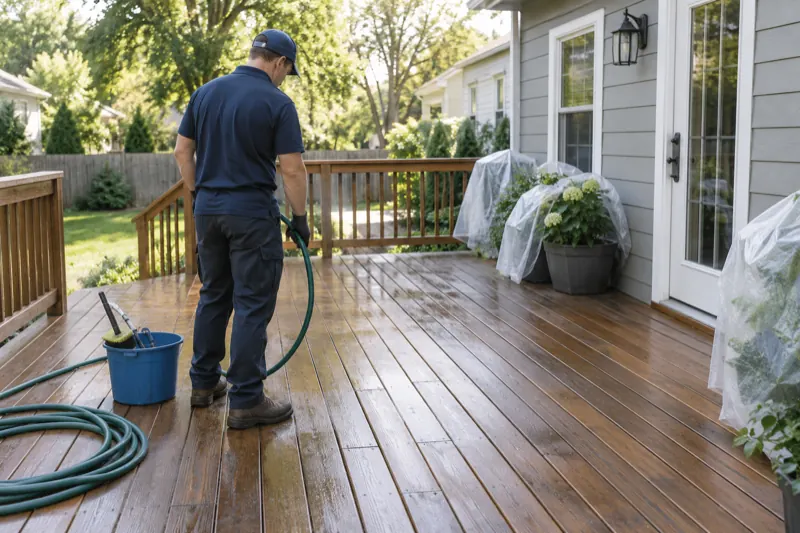
A clear deck surface starts by sweeping away sharp twigs, built-up mud, and damp leaves trapped between the boards. A local pro clears the floor so water can flow freely.
Grass and plants bordering the deck are heavily soaked with clear water and covered before any washing agents are used.
A washing solution breaks down slippery green algae, dark fungal growth, and weather-worn gray wood. The pro uses low water pressure along the length of each board to rinse the grime away without splintering wood.
Railings, balusters, and stair steps are washed by hand. The service ends with a complete fresh-water rinse and a quick walk around the deck with you. A measured softwash method releases each contaminant, helps remove algae, and breaks up mildew and algae film, grime, and years of dirt. This approach gives outdoor boards a clean finish without harsh blasting.
You do not have to spend your weekend scrubbing dirty boards or hauling heavy equipment around the area.
Pressure-treated pine, cedar, and redwood are soft woods that easily split if rinsed with excessive force. Dense hardwoods respond best when grayed fibers are softened before washing. The pro adjusts the pressure to clear away built-up growth without gouging the grain.
While engineered boards stay rot-free, airborne dirt and moss cling tightly to the manufactured grooves. Professionals use gentle solutions aligned with manufacturer specifications to remove persistent film without stripping the protective shell.
Ground-level masonry absorbs damp leaf tannins and black fungi over time. Washing extends to your concrete walkways, brick patios, paver paths, and pool deck edges to pull deep dirt out of porous stone. Pool deck cleaning services can address hardscape next to the swimming zone as part of the same project. A careful rinse can clean your pool deck, protect your pool, and improve the walking surface.
Arranging a complete washing for your backyard area is a smooth experience when you submit your deck details through our site. A local specialist reviews your information. You then move forward on your own terms.
Submit your deck measurements, material type, condition notes, and photos.
A washer in the area calculates a quote.
Review the work details, select your date, and accept the offer.
The pro washes your surface surfaces. You pay strictly for the work.
You can expect surface washing to start at $150. The actual cost varies with square footage and the amount of intricate manual work, such as washing around balusters, stair treads, and long railings. Heavily soiled surfaces with thick biological growth, black fungal growth, or stubborn leaf marks take longer to treat properly. Material selection also influences the approach, as cedar, redwood, pressure-treated lumber, and composite boards respond differently to washing solutions. High structures or awkward garden access can shift labor needs. If you decide to add protective sealing or finishing once the surface dries, that is priced as a separate job. You receive an accurate, all-inclusive price estimate before any technician begins.
Questions about your surface? Call +1 (855) 684-6078 or use the quote form.
Composite material requires regular surface care just like traditional wood framing. While composite materials resist deep rot, mold, growth, and leaf marks still settle into the textured grain, making walkways slick and unsafe in the area. On adjacent wood rails or steps, sun damage breaks down natural fibers into sharp splinters. Trapped grime on any surface holds dampness against metal fasteners, causing hardware to corrode sooner. Washing removes slippery organic layers and stuck-on dirt without damaging delicate board textures. It also prepares any nearby natural wood components to absorb a coat of protective sealer evenly.

Shifting weather leaves behind heavy pollen coatings, wet leaf spots, and stubborn gray wood fibers. Clearing this buildup safely requires patience rather than harsh water impact that scars soft lumber. A local pro puts down an effective washing product that breaks up ground-in dirt. Low water pressure then rinses away residue without chewing up the grain or tearing stair edges. Synthetic composite boards receive care tailored to keep their factory finish intact. People comparing pressure washing services with professional pressure washing in Pleasantville can choose a method suited to the surface.
Properties in the area and surrounding parts of Atlantic County deal with steady weather impacts across every season. Strong summer sunshine steadily turns bare wood fibers gray. Damp fall days drop heavy leaf cover that sits on the boards, while spring brings damp air and heavy pollen coatings. Clearing this damp debris and fine film prevents lingering discoloration across your outdoor use area.
Have you noticed dark, blotchy patches under piles of old wet foliage on your floorboards? Around here, spring pollen and oak catkins construct a persistent dusty film across outdoor structures. As fall arrives, maple leaves blanket the area while sweetgum balls and acorns settle in low points. The trapped moisture pulls tannins from the debris into the grain, which takes a dedicated outdoor washing liquid to break down properly.
If you are preparing your home for market, a fresh finish coat requires thorough surface preparation first. Sealer cannot bond to weathered, gray wood or embedded dirt, so the surface must be properly washed first. A dedicated wood brightener is used right after to balance timber shades and open the pores. Total drying time is necessary before putting down any finish. Finishing or sealing can be booked as a separate service with a clear price after the pro inspects the bare boards.
Before applying a finish to your surface in the area, routine care helps maintain a uniform surface. Sweeping off leaves, twigs, and needles prevents dark spots from building up in the wood grain. Keep board gaps clear so water drains away instead of pooling along the edges. Move door mats and plant saucers to allow the timber underneath to dry out completely. Cut back shady branches to give the surface better sun exposure, and rinse off fine pollen dust with a hose.
You do not have to spend hours calling regional contractors or leaving voicemail messages just to clear your surface. Sending one request through our site puts you in touch with a local surface washing pro who serves the area. You get a complete quote that spells out every detail of the work. Take your time to review the offer and approve it before the cleaner sets foot on your property. We keep our terms plain and simple. You pay only for the agreed surface-care service itself, with zero added fees or unexpected surcharges.
Surface washing support is available in the area and the nearby communities across Atlantic County. Pick the town listed below that sits closest to your home to receive your estimate. Across Pleasantville and nearby communities, local professionals provide service close to home, including near Northfield.
Request your free cleaning quote for the deck today by letting us know the material and approximate size of your boards. Uploading a couple of pictures helps us match you with a local pro in Pleasantville.
Deck Installation. Copyright . All rights reserved.