Board and Surface Preparation
Sweeping away leaves and clearing out packed debris between deck boards prevents dirt from smudging during the process. Nearby plants get a thorough freshwater pre-rinse and protective covers.

Living in this part of the state within Lancaster County, you see how fast dirt, green algae, and gray weathered wood fibers make a deck look tired. Fallen leaves drop deep tannin marks into the grain, while mildew makes the boards dull. Through one quick request, we match you with a local pro who washes away these stubborn layers. Specialist surface care starts at $150, leaving your outdoor use area tidy and clean with no extra platform charges. For Pennsylvania homeowners, professional deck cleaning supports curb appeal and makes an outdoor living space easier to enjoy. Local specialists tailor each washing service to the boards instead of treating every surface the same.
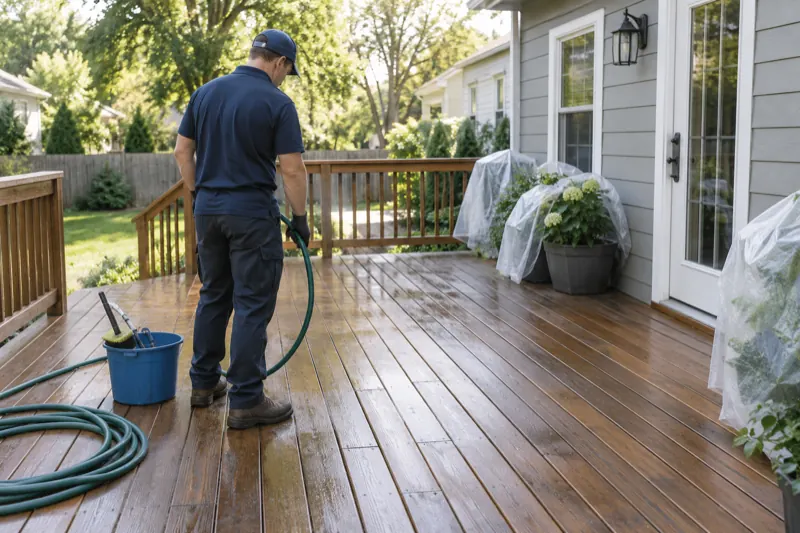
Sweeping away leaves and clearing out packed debris between deck boards prevents dirt from smudging during the process. Nearby plants get a thorough freshwater pre-rinse and protective covers.
A dedicated deck cleaner breaks down stubborn fungal growth, algae, and gray wood fibers. After the product sets, a gentle low-pressure spray washes away the loosened grime along the board grain.
Railings, spindles, and stair treads are washed by hand for consistent results. A complete final rinse clears any lingering wash water before you inspect the finished deck together. A measured softwash method releases each contaminant, helps remove algae, and breaks up mildew and algae film, grime, and years of dirt. This approach gives outdoor boards a clean finish without harsh blasting.
You do not have to spend your weekend scrubbing gray boards or risking water damage with an unfamiliar pressure washer. Pressure-treated pine, cedar, redwood, and hardwoods get cleared of dead fibers by a local pro. Softwood species receive low-pressure washing that preserves wood grain.
You can avoid buying specialty detergents to scrub tiny grooves on synthetic boards. Composite and PVC decks resist rotting, but fungal growth and dirt settle deep in the manufactured grain. The cleaner manages this work following the deck builder care guidelines.
Residents skip the heavy work of scraping moss off brick joints and entry stairs. Stone patios, concrete steps, pool decks, and pavers clear up through professional low-pressure washing. Local pros clean these ground surfaces in the area. Pool deck cleaning services can address hardscape next to the swimming zone as part of the same project. A careful rinse can clean your pool deck, protect your pool, and improve the walking surface.
Composite boards trap fine pollen and dirt over time, so send us your deck measurements, board type, and photographs.
A local surface pro calculates the cost based on your specific layout and responds with a price.
Look over the service terms and choose a suitable calendar date.
The cleaner washes away built-up grime, and you pay exclusively for the washing option without added fees.
Starting at $150, surface washing costs are calculated based on the total surface area and physical details of the structure. High structures, multi-level layouts, stairs, and extensive railing systems require manual labor that increases the cost beyond a simple flat floor. The material of the material and the degree of buildup matter significantly. A surface coated in heavy fungal growth, thick biological growth, gray weather damage, or dark leaf spots requires thorough treatment. Access constraints around trees or fencing also impact the time needed. Should you wish to apply fresh finish or sealant, that service is priced individually as a separate option. You receive a clear, upfront quote prior to cleaning, with no hidden charges added later.
Questions about your surface? Call +1 (855) 684-6078 or use the quote form.
Homes throughout nearby communities and throughout Lancaster County deal with heavy dampness that feeds growth on exterior materials. That green buildup makes wet stairs and material treacherous to walk on after rain. As the growth expands, it locks damp air against board ends and fasteners, hastening soft spots around hardware. Sunlight further damages the surface by breaking down wood fibers until they turn gray and splinter. Rinsing away the accumulation creates a safer walking path. It also leaves clear, open wood grain that easily accepts protective finish or sealer when you decide to apply it.

Before putting down a fresh coat of finish or sealer, the underlying boards must be properly washed without destroying the natural wood grain. Blasting the surface at maximum water force chews up soft fibers, leaving splinters and carved lines that show right through new finishes. A skilled technician applies a surface washing formula that frees trapped dirt and lifts gray fibers smoothly. A soft, broad rinse then clears the wood surface along each plank. For composite or PVC structures in the area, washing practices follow exact manufacturer instructions, keeping your synthetic outdoor floor clear and ready for use. People comparing pressure washing services with professional pressure washing in Fulton can choose a method suited to the surface.
You do not have to scrub damp fungal growth off your boards yourself when the local weather changes. Damp autumns and wet springs throughout nearby communities bring steady moisture that feeds green growth. High sun during warmer months dries out natural fibers and turns unsealed boards gray. Dustings of yellow flower dust stick in humid air, while rotting foliage drops dark spots on every surface. Scheduling a thorough wash after major seasonal shifts helps protect the wood.
Fall drops heavy foliage from local maple, oak, and sweetgum trees that sits on wet material until dark marks leach deep into the grain. Spiky seed balls collect in tight crevices. Spring covers everything in powdery catkin dust. Washing the surface clears out these rotting botanical layers before they cause slick conditions. Rinsing along the board length protects the softened surface.
Months of rain, falling leaves, and pollen leave an oily, slick film across your material boards. Sealing or finishing over this layer locks in discoloration and causes the new finish to peel quickly. A thorough washing removes the dirt, followed by a wood brightener to harmonize the natural wood tones. The surface must dry completely before applying any protective coat. If you want sealing or finishing, your pro in the area can quote that as an additional job after assessing the clear wood.
Composite material requires minimal maintenance, but organic growth can still take root in standing dirt. Keep the gaps between your synthetic planks clear so rinsing water drains freely. Sweep up damp leaves and pine needles before they decompose on the floor. Lift heavy potted plants and dense outdoor rugs to keep moisture from sitting underneath. Prune back shady tree branches, and periodically wash off airborne pollen with your garden hose.
A clear, hazard-free outdoor floor starts long before the water turns on. It begins when you submit one simple form detailing your surface layout. We take those facts and match you with a local surface washing pro suited for the material. You receive a written quote outlining the exact scope of work. Nothing happens until you check every line and approve the terms. We skip hidden service charges completely, so you pay only for the finished work in the area.
Residents outside the area can submit surface washing requests through our site. Pick the location nearest your property to see service details and connect with a nearby professional. Across Fulton and nearby communities, local professionals provide service close to home.
Tell us the material and approximate square footage of your deck to receive a free cleaning quote. Adding photos helps us evaluate the surface before a local pro sends your price. Submit your details today to get started in Fulton.
Deck Installation. Copyright . All rights reserved.